


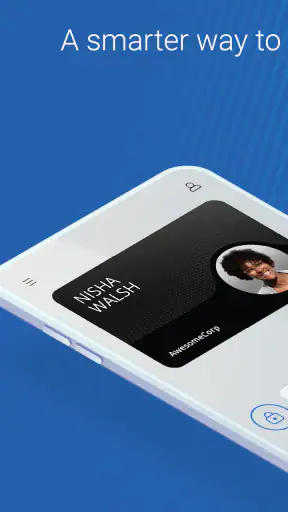
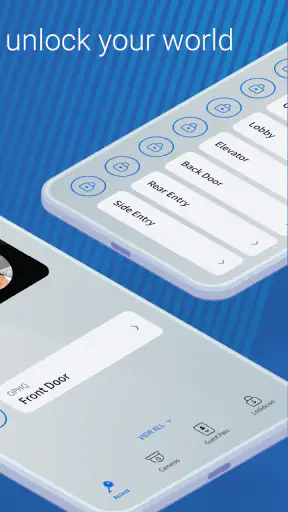
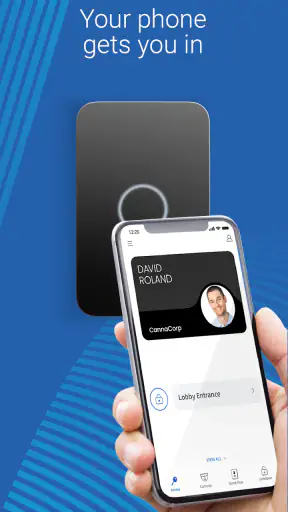
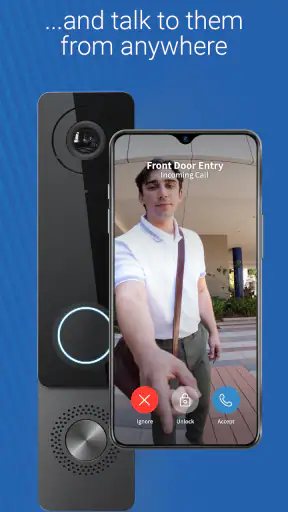
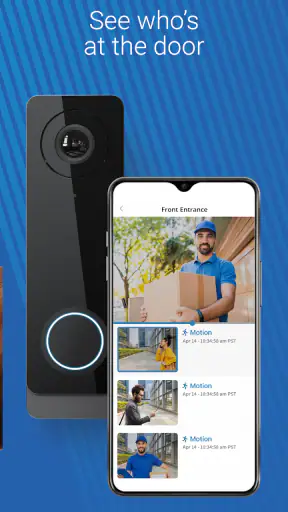

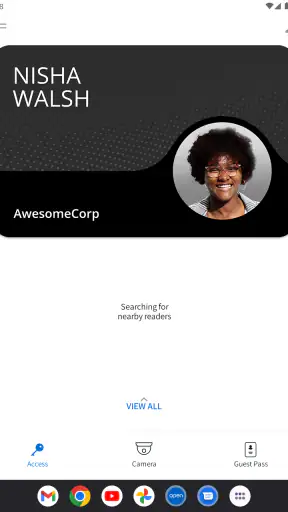
I first looked at Avigilon Alta Open as the kind of business app that can quietly become part of an everyday routine. Its purpose is straightforward: it lets an authorized person use a phone to open compatible doors. That sounds simple, but the practical value depends on who manages access, how many people need it, and whether everyone understands the boundary between a personal phone and a shared entrance.
In my experience, the app makes most sense in workplaces, managed buildings, and other locations where door access is already handled through Avigilon Alta equipment. It is not a general replacement for every key, intercom, or building-management system. Instead, it is a mobile access tool built around a specific access environment. That distinction matters before anyone installs it, particularly in a household or shared-device situation where several people may expect one phone to work for everyone.
Openpath Security, Inc developed the app, which is listed in the Business category and is free to install. It has an average rating of 4.2 from around 3.1 thousand ratings, with more than a thousand reviews, and has passed one million installs. Those figures suggest that it is used well beyond a small pilot group, although popularity alone does not guarantee that it will work with the doors you need to use.
How Avigilon Alta Open fits into shared everyday access
A realistic household and shared-device scenario
Imagine a household member who works in a building using Avigilon Alta access. They carry their own Android phone and need to enter the office during the day. Another person in the household may use the same phone occasionally, help with errands, or need to understand why the device is important. The useful arrangement is not to treat the phone as a communal key. It is to treat it as a personal credential belonging to the person whose access has been authorized.
That difference is easy to overlook. A physical key can be handed from one person to another, while a phone is also tied to its owner, notifications, account activity, and general privacy. Letting someone borrow the device may give them more access than intended, while refusing to share it may be inconvenient if the phone is the only way to enter. I would therefore plan around individual responsibility rather than assuming that one installed copy should serve an entire household.
For a shared office, the same principle applies. A manager may want several employees to enter, but the clean approach is for each person to receive access through the organization’s own process. Installing the app on one supervisor’s phone and passing that device around creates confusion about who is supposed to use the door and who is accountable when the phone is lost or unavailable.
This is one of the app’s most important practical boundaries: the software can be free while access itself remains controlled by the building or organization. Downloading it does not automatically turn a phone into a universal key. Before relying on it for a workday, I would confirm that the relevant location uses the compatible access system and that the intended user has been authorized.
Setup is simple only when the access boundary is clear
The initial installation should be approached as part of an access handoff, not as a casual app download. I would install it on the phone that the authorized user normally carries, keep the device available during the first access attempt, and test the arrangement before an important meeting or early shift. This avoids discovering at the entrance that the phone has the app but the user has not been properly enabled.
The app is currently version 3.5.2 and requires a minimum operating-system version of 10. That requirement is comfortable for many modern devices, but it can matter in a household with an older spare phone. A phone that is kept only for emergencies may not be suitable if it cannot meet the operating-system requirement or is rarely updated. I would check the device first rather than moving access to an old handset at the last minute.
There is also a useful separation between the phone owner and the person who controls the building’s access. The user can install and use the app, but the organization or property manager remains the party that determines whether the person should be able to enter. This is healthier than treating the app as an independent access-management service. If someone changes jobs, moves offices, or should no longer enter a location, the responsible administrator needs to handle that change.
For a shared device, I would be especially careful with sign-in state and phone security. The app should not be treated like a public tablet application that anyone can open without thought. A household tablet left on a kitchen counter is a poor substitute for the authorized user’s own secured phone. Even when several people trust one another, separating personal access credentials reduces accidental use and makes it easier to understand who is responsible for the device.
A practical setup routine is to identify the authorized user, confirm the compatible door system, install the app on that person’s usual phone, and perform a low-pressure test. I would also decide what happens if the phone battery is low, the device is left at home, or the user changes phones. The app can be valuable in daily use, but it should not encourage a household to forget its ordinary building instructions or emergency arrangements.
Coordinating people without turning one phone into a key ring
Avigilon Alta Open is most useful when coordination happens before anyone reaches the door. In an office, that may mean the person responsible for access explains which entrances are supported and who should use the mobile credential. In a shared living arrangement, it means agreeing that the phone belongs to one authorized person and that other occupants should use their own approved method where appropriate.
This approach prevents a common mistake: assuming that installing the same app on several phones automatically creates a shared access group. I would not make that assumption. Each additional user should be handled through the building’s authorization process, because the app on a phone and permission at a door are related but not identical things.
Coordination is also important when a phone is replaced. The person changing devices should plan the transition while the old phone still works, rather than wiping it immediately and hoping the new installation will be ready. The safest workflow is to treat a phone change as an access change: keep the responsible contact informed, install the app on the replacement device, and verify entry before disposing of the old one.
The same thinking helps with guests. I would not hand my phone to a visitor simply because they need to reach a door. A guest should follow the property’s normal visitor process, while the authorized user keeps control of their own device. This is less convenient than passing over a physical key, but it creates a clearer boundary and avoids confusing a personal mobile credential with a general invitation.
For teams, the app can reduce the small daily friction of carrying a separate badge, but only if everyone has a clear fallback plan. A phone may be forgotten, damaged, out of power, or unavailable during a shift. The sensible question is not whether the app removes every access problem; it is whether the organization has explained what to do when mobile access is temporarily unavailable.
Age, trust, and responsibility in a household
The app carries an Everyone content rating, which makes it broadly suitable from a content perspective. That does not mean every child should be given unsupervised responsibility for a door credential. Age rating describes the nature of the app, while access responsibility depends on the building, the household, and the consequences of opening a particular entrance.
For an older teenager who has legitimate permission to enter a workplace or managed building, the main issue may be reliability and trust rather than the app’s content. I would make sure they understand that the phone is not a toy key and that they should not lend it to friends. For a younger child, I would be much more cautious, especially if the door leads to a restricted area or if the child may not understand when access is appropriate.
Households also need to distinguish convenience from entitlement. A family member may be trusted with the phone but still not be authorized to enter a business location. Conversely, someone may be authorized to enter but should not be given unrestricted access to another person’s handset. Keeping those two decisions separate is a small but important improvement over informal sharing.
I also appreciate that a mobile access app makes the phone itself part of the security conversation. A strong device passcode, sensible screen-lock habits, and care when lending the phone matter just as much as installing the application. I would avoid leaving an authorized phone unlocked in a public place, even if the people nearby seem familiar. The app’s usefulness depends on the phone remaining under the right person’s control.
Where it beats ordinary alternatives
Compared with a conventional physical key, the main attraction is convenience. I already carry a phone, so a compatible mobile credential can reduce the number of separate objects in my pocket. It may also fit better into workplaces where access is managed centrally rather than through copies of metal keys. The benefit is strongest for people who regularly move between managed entrances and want one familiar device with them.
Compared with a badge or access card, the phone can feel more natural for users who are less likely to forget it. A badge is still appealing for a shared reception desk, a temporary worker, or a situation where phones are restricted. I would choose the physical option when the organization has a clear badge process and the user does not want work access tied to a personal handset.
Compared with an intercom or receptionist, the app is better suited to authorized routine entry than to occasional visitors. It does not replace the human judgment involved in checking a guest or handling an unusual delivery. If your main need is to let visitors explain themselves at the entrance, a visitor-management or intercom system may be more appropriate than a mobile door credential.
Compared with a generic smart-lock app, this product is also more dependent on the access environment around it. A household looking for a way to manage a private front door should first examine whether its existing lock supports Avigilon Alta. If not, a consumer smart-lock application designed for that specific lock may be the better choice. Installing this app simply because it opens doors would be the wrong selection process.
Small frictions that affect real use
The biggest limitation is dependence on authorization and compatible infrastructure. The app cannot solve a building-level access problem from the phone alone. If a manager has not enabled the user, or if the entrance is outside the supported setup, the installation will not deliver the expected result. That makes pre-use confirmation essential.
Another trade-off is dependence on the phone as an everyday object. A forgotten handset, a damaged device, or a depleted battery can turn a normally quick entrance into a stressful moment. I would keep the organization’s contact details and fallback instructions available somewhere other than the app itself. This is particularly important for workers who start early, arrive outside staffed hours, or travel between sites.
There is also a privacy and boundary consideration in household use. A person may not want to mix a work-related access tool with a family-shared phone, and a family member may not understand why borrowing the phone is sensitive. I would use a personal handset whenever possible, not because the app is difficult, but because access credentials should be easy to attribute.
The app’s free price makes trying it less risky, but it does not remove the need to check the broader arrangement. The building’s access policy, the phone’s condition, and the user’s authorization are more important than the download cost. This is a case where a free app can still require thoughtful preparation.
Who should use it and who should skip it
I would recommend Avigilon Alta Open to an employee, tenant, or authorized member of a managed location that already relies on the compatible Avigilon Alta access environment. It is also a reasonable fit for organizations trying to make routine entry less dependent on separate cards, provided they are prepared to explain phone security and backup procedures.
I would skip it if the goal is to open an ordinary household lock without checking compatibility, share one credential casually among several people, or provide unrestricted visitor access. I would also hesitate if the intended user frequently loses their phone or works in a setting where personal devices are not allowed at entrances. In those cases, a badge, key, intercom, or another access method may be more dependable.
My household verdict is positive but deliberately narrow. The app is a convenient personal access tool, not a family key cabinet. Used by the right person, on the right phone, at a compatible location, it can make routine entry feel much less cumbersome. Used as a shortcut around authorization or shared casually across a household, it creates more confusion than convenience.
With its free availability, Everyone rating, and broad adoption, it is easy to try when an organization directs you to it. I would still begin with the access boundary: confirm the building, confirm the user, and confirm the phone. Once those pieces are in place, the experience is focused and practical. My final recommendation is for authorized users who value phone-based entry and are willing to keep personal device ownership, household trust, and building-level permission clearly separated.


